🔍 WorthSnag’s commitment to transparency: We only recommend products we’ve researched through verified customer reviews, return rate analysis, and brand reputation checks. No paid placements. Our picks are based on real buyer feedback, not commissions.
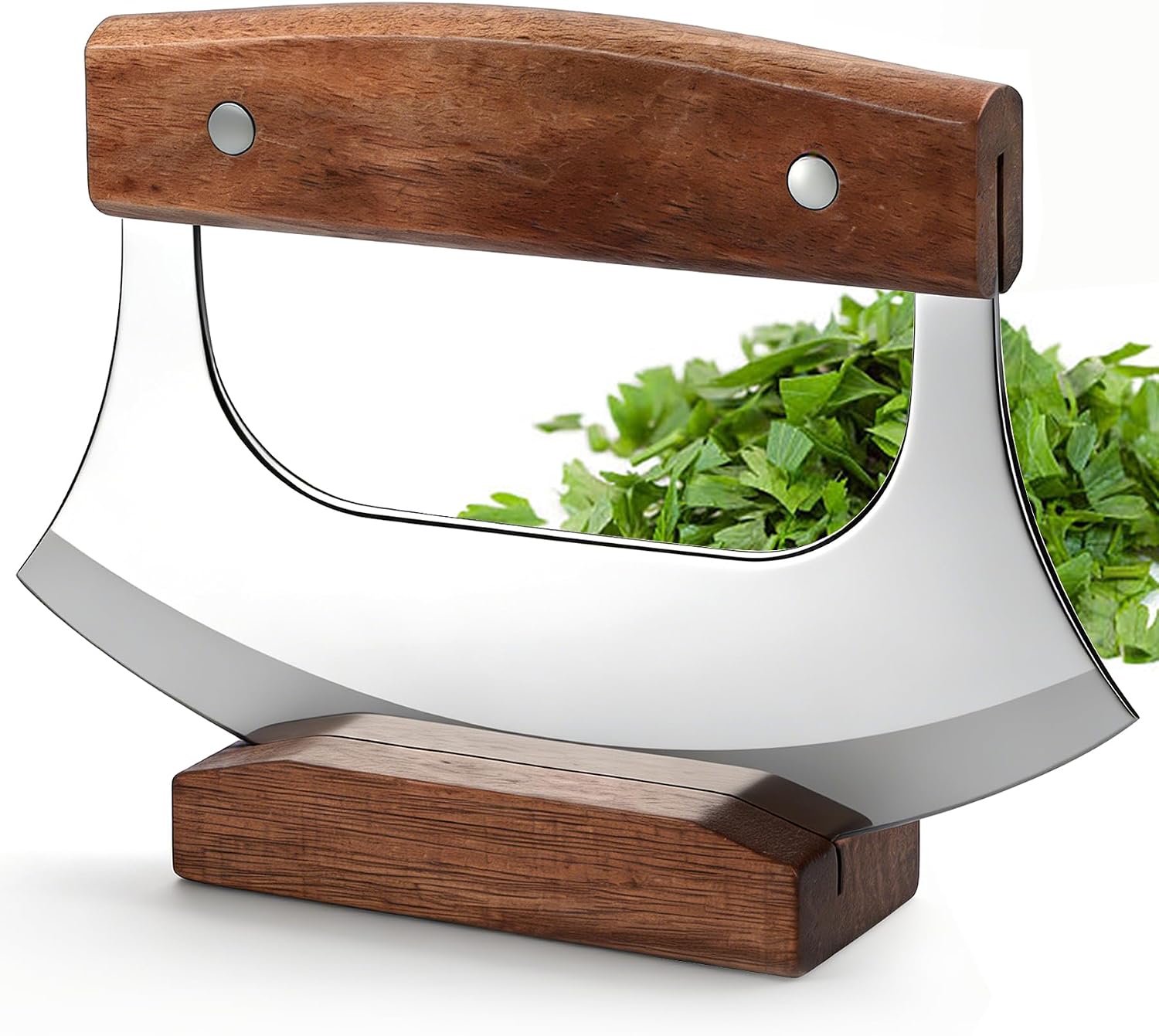
🔪 A rocker knife is a curved kitchen knife that cuts with a rocking, side-to-side motion instead of the back-and-forth sawing a standard knife needs — which means it works with one hand pressing straight down, no second hand required to steady the food or apply sawing force.
🍽️ Part of our Home & Kitchen series. If mealtime independence is what brought you here, our guide to weighted utensils for hand tremors and Parkinson’s covers the fork-and-spoon side of the same problem.
🔪 Ready for easier cutting? Shop the best rocker knives on Amazon →
Cutting food with a standard knife asks for two hands doing two different jobs at once — one sawing back and forth, the other pinning the food in place so it doesn’t slide across the plate. For anyone missing full function in one hand, or whose grip isn’t reliable enough to trust with a sharp blade near their other fingers, that combination turns dinner into something to dread rather than enjoy.
A rocker knife removes the sawing motion entirely. The blade curves downward, so instead of pushing a knife forward and back, you rock it side to side while pressing straight down — a motion that works fine with one hand and doesn’t need the food held in place by a second one at all.
Here’s what I’m covering below:
- Five rocker knives worth buying, and where the real differences actually show up
- Who else benefits from a rocker knife beyond arthritis specifically
- What actually matters when you’re comparing these, versus what’s just packaging
I went through Amazon reviews, a few posts from occupational therapy forums, and enough one-star reviews to see which “ergonomic” claims were real and which were just marketing copy on a knife that’s basically identical to five others. Here’s what actually held up. 👇
Quick Comparison: Best Rocker Knives for Arthritis and One-Handed Cutting
| Pick | Best For | Blade Style | Price |
|---|---|---|---|
| PKPKAUT One-Handed Rocker Knife | Best Overall | Curved, with wrist strap | ~$12–$18 |
| YOTAN Rocker Knife | Best Budget Pick | Curved, ergonomic grip | ~$10–$15 |
| North Coast Medical Big Grip T-Handle | Best Clinical-Grade Option | T-handle, non-slip | ~$20–$30 |
| DMI Rocker Steak Knife | Best for Simplicity | Curved, vertical grip | ~$10–$15 |
| Swivelife Rocker Knife | Best for Travel | Curved, with sheath | ~$12–$18 |
Why a Rocker Knife Actually Solves the One-Handed Problem
The mechanics come down to two design choices that most standard knives don’t have:
- A curved blade — instead of a straight edge that needs a sawing motion, the curve lets the whole blade contact the food at once when you press down, cutting through in a single rocking motion rather than repeated back-and-forth strokes.
- A vertical or T-shaped handle — many rocker knives put the handle directly above the blade rather than in line with it, which lets you apply downward force using your arm’s natural strength instead of wrist strength alone.
Together, these mean the knife does the work that used to require two coordinated hands, using just the downward pressure and rocking motion one hand and arm can manage on its own.
The 5 Best Rocker Knives for Arthritis and One-Handed Cutting
1. PKPKAUT One-Handed Rocker Knife — Best Overall
Price: Around $12–$18 | Blade: Curved, serrated, German stainless steel | Extras: Adjustable wrist strap
This is the one that shows up most consistently across reviews from people who’ve actually tried a few different rocker knives before settling on one. The wrist strap is the detail that matters most here — it’s built specifically for people with little or no grip strength, holding the knife against the hand rather than relying on fingers to keep it there.
Why it’s a top pick: The wrist strap solves the “what if I can’t grip it at all” problem that the other knives on this list don’t fully address.
Best for: Anyone with very limited or no hand strength, not just reduced dexterity.
Check price on Amazon →
2. YOTAN Rocker Knife — Best Budget Pick
Price: Around $10–$15 | Blade: Curved, stainless steel | Extras: Ergonomic grip handle
Straightforward and cheap, without cutting corners on the part that actually matters — the curve of the blade. If you’re not sure a rocker knife is going to help before you’ve tried one, this is the low-risk way to find out.
Why it’s a top pick: Does the core job well at a price that makes trying it an easy decision.
Best for: First-timers who want to test the concept before spending more.
Check price on Amazon →
3. North Coast Medical Big Grip T-Handle Rocker Knife — Best Clinical-Grade Option
Price: Around $20–$30 | Blade: Stainless steel, non-slip T-handle | Extras: Blade cover included
North Coast Medical builds specifically for occupational therapy and rehab settings, not general kitchenware, and the T-handle grip reflects that — it’s noticeably wider and more stable than a standard handle. If a doctor or OT specifically recommended this style, this is the brand most likely to be what they meant.
Why it’s a top pick: Built to a clinical standard rather than a general consumer one, which shows in the grip stability.
Best for: Anyone following a specific OT or doctor’s recommendation for grip type.
Check price on Amazon →
4. DMI Rocker Steak Knife — Best for Simplicity
Price: Around $10–$15 | Blade: Curved, vertical grip | Extras: Dishwasher safe
No wrist strap, no unusual grip shape — just a solid, no-frills rocker knife that does what it says. The vertical grip design increases downward cutting force compared to a flat handle, which is really the whole point of a rocker knife in the first place.
Why it’s a top pick: A trusted, uncomplicated design without extra features that some buyers don’t need or want.
Best for: Anyone who wants the core rocker-knife benefit without added attachments.
Check price on Amazon →
5. Swivelife Rocker Knife — Best for Travel
Price: Around $12–$18 | Blade: Curved, with protective sheath | Extras: Leather sheath, tip cover
The included sheath is the reason this one makes the list — most rocker knives don’t come with any way to carry them safely outside a kitchen drawer. If you eat out, travel, or want to keep one in a bag rather than leaving it at home, this is the practical pick.
Why it’s a top pick: The only knife on this list actually built to be carried safely, not just used at one kitchen table.
Best for: Anyone who needs a rocker knife outside their own kitchen, not just at home.
Check price on Amazon →
Who Else Benefits From a Rocker Knife
Arthritis is the most common reason people look for these, but the same design helps a few other situations:
- Stroke recovery and one-handed use: since the knife doesn’t need a second hand to hold food in place, it works for anyone with limited or no use of one hand.
- Parkinson’s and essential tremor: the rocking motion needs less fine motor control than sawing, and several models (like the PKPKAUT) add a wrist strap specifically because tremor can make even holding a knife handle unreliable. If mealtime tremor is the main issue, our weighted utensils guide covers the fork-and-spoon side of the same challenge.
- Limited wrist mobility: a sawing motion requires a wrist range of motion that a rocking motion simply doesn’t ask for.
- Visual impairment: a rocking, straight-down motion is easier to control by feel than a back-and-forth sawing motion, which relies more on visual feedback to avoid slipping.
How to Choose the Right Rocker Knife
- Decide if you need a wrist strap. If grip strength, not just fine control, is the issue, a strap-equipped knife like the PKPKAUT does more of the actual holding for you.
- Consider the handle shape, not just the blade. A T-handle or vertical grip increases the downward force you can apply compared to a flat, in-line handle — this matters more with tougher foods like meat.
- Think about where you’ll use it. If it’s staying in one kitchen, a basic model is fine. If it needs to travel with you, a sheathed option like the Swivelife is the more practical choice.
- Don’t assume “for arthritis” branding means better quality. Several genuinely good options, like the DMI, are marketed simply as rocker knives without heavy adaptive-equipment branding, and work just as well.
Frequently Asked Questions
How does a rocker knife actually help with one-handed cutting?
A rocker knife has a curved blade that cuts with a rocking, side-to-side motion instead of the back-and-forth sawing a standard knife requires. Because the whole curved edge contacts the food at once, downward pressure alone completes the cut, removing the need for a second hand to hold food steady or apply sawing force.
Is a rocker knife safe to use with limited hand strength?
Yes, when paired with the right features. Models with a wrist strap, like the PKPKAUT, keep the knife secured to the hand even if grip strength alone wouldn’t hold it, and a T-handle or vertical grip design further reduces the fine motor control needed to use it safely.
Can a rocker knife be used for foods other than meat?
Yes. Rocker knives work well on most foods that would normally require sawing, including bread, vegetables, and sandwiches, though very tough or fibrous cuts of meat may still take more effort than a standard sharp knife.
Do rocker knives work for people with hand tremors?
Yes. The rocking motion requires less continuous fine motor control than sawing, and several models are specifically designed with tremor conditions in mind, including added grip stability features like a wrist strap or T-handle.
Is a rocker knife dishwasher safe?
Most stainless steel rocker knives, including the DMI and PKPKAUT models, are dishwasher safe, though it’s worth checking a specific product’s care instructions since handle materials can vary in heat tolerance.
Final Thoughts
Cutting your own food shouldn’t require asking for help or dreading dinner. Any of these five rocker knives for arthritis and one-handed cutting solve the same core problem — replacing a two-handed sawing motion with one-handed rocking pressure — and the right pick comes down to how much grip support you need and whether it’s staying in one kitchen or coming with you.
If you’re not sure a rocker knife will actually help, the YOTAN is cheap enough to just find out. If grip strength is the real issue, go straight to the PKPKAUT and its wrist strap.
For more background on living well with arthritis day to day, the Arthritis Foundation is a genuinely useful resource beyond just product recommendations.
🔪 Ready for easier cutting? Shop the best rocker knives on Amazon →
1 thought on “Best Rocker Knives for Arthritis and One-Handed Cutting: Top 5 Picks”