Discover the enduring appeal of the Ernie Ball Regular Slinky, a staple among guitarists worldwide. This comprehensive article delves into its design, sound qualities, and practical applications, offering valuable insights for players of all levels. Whether you’re a seasoned professional or a curious beginner, explore how this iconic string can elevate your musical experience.
Introduction to the Ernie Ball Regular Slinky
Overview of the Ernie Ball brand and its legacy in guitar string manufacturing
Ernie Ball, a renowned name in the world of guitar accessories, has established a legacy rooted in quality, innovation, and consistency. Since its inception, the brand has been dedicated to producing high-performance guitar strings that meet the demands of musicians across genres. Known for their reliability and exceptional tone, Ernie Ball guitar strings are a staple in both professional studios and casual practice spaces worldwide. The company’s commitment to craftsmanship is evident in every set of Ernie Ball Regular Slinky strings, which have become synonymous with versatility and durability.
Definition and general characteristics of the Ernie Ball Regular Slinky
The Ernie Ball Regular Slinky is a series of electric guitar strings celebrated for their balanced tone and comfortable feel. These ball strings feature a nickel-plated steel wrap wire wound around a steel core, delivering a bright, warm sound with excellent sustain. Known for their smooth playability, the Ernie Ball Regular Slinky guitar strings are designed to cater to a wide range of playing styles, making them a popular choice among guitarists seeking reliable electric guitar strings.
The significance of the Regular Slinky in the history of electric guitar strings
Since their introduction, the Regular Slinky has played a pivotal role in shaping modern electric guitar tone. Its consistent quality and versatile sound profile have made it a go-to choice for countless musicians, from legendary rock icons to emerging artists. The Ernie Ball electric guitar strings’ influence extends beyond sound, impacting playing techniques and recording practices, solidifying their place in the evolution of guitar music.
Purpose and scope of this in-depth review for guitarists of all levels
This comprehensive analysis aims to provide guitarists—whether beginners or seasoned professionals—with detailed insights into the Ernie Ball Regular Slinky. We will explore its design, sound qualities, practical applications, and its enduring relevance in today’s musical landscape. By the end, readers will have a clearer understanding of how these guitar strings can enhance their guitar tone and overall playing experience.
Design and Construction of the Ernie Ball Regular Slinky
Material composition: high-quality nickel-plated steel for durability and tone
The Ernie Ball Regular Slinky strings are crafted from high-quality nickel-plated steel, a material chosen for its excellent balance of durability and tonal warmth. This composition ensures that the ball guitar strings resist corrosion and maintain their integrity over extended periods, making them ideal for audio recording work and regular gigging. The nickel plating also contributes to the strings’ bright, articulate sound, which complements a variety of electric guitar styles.
Gauge specifications: detailed breakdown of string gauges and their impact
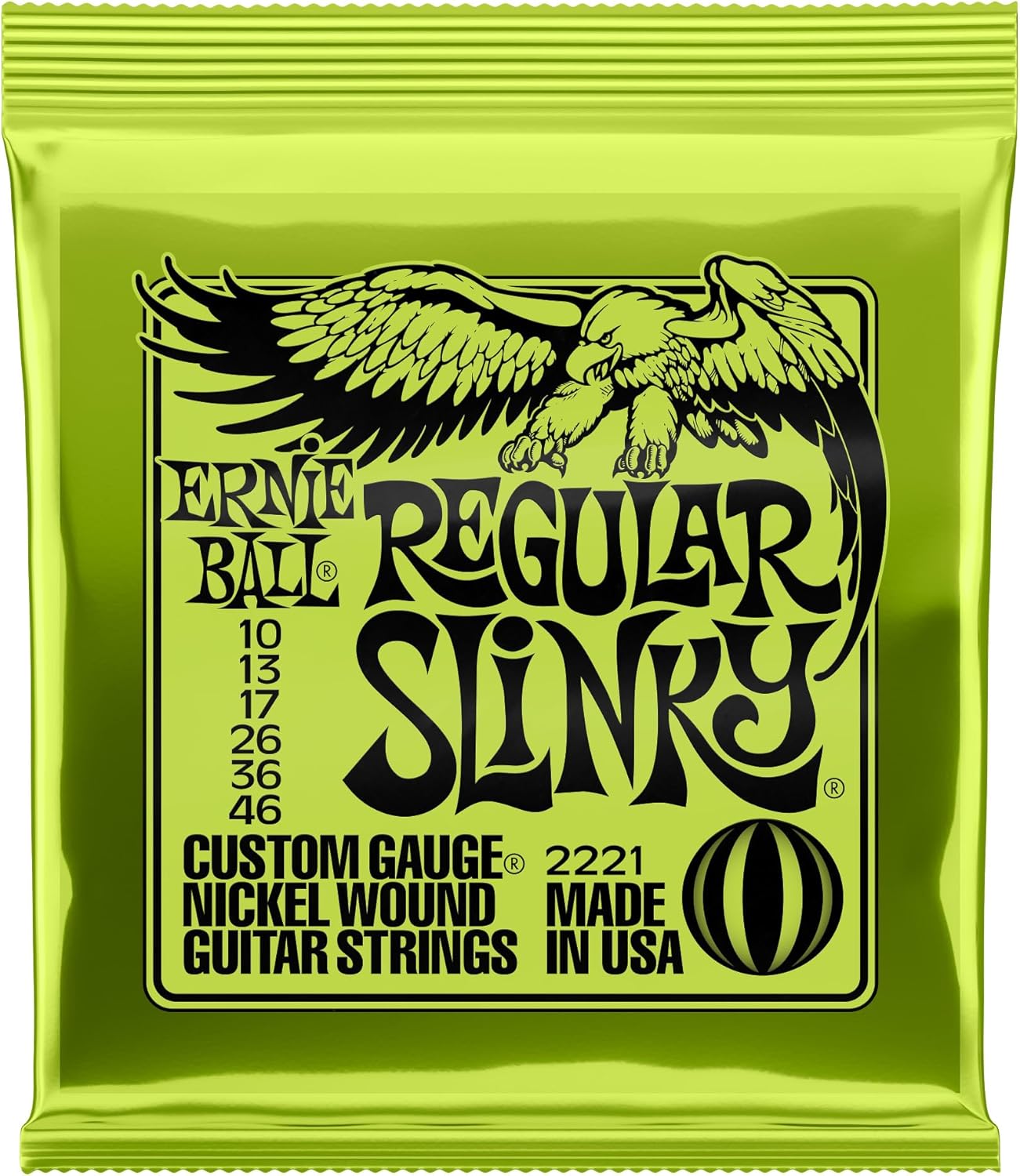
The Ernie Ball Regular Slinky set typically features gauges of .010, .013, .017, .026, .036, and .046 inches. This gauge configuration offers a balanced tension that provides both ease of play and expressive flexibility. Thinner gauges, like .010s, facilitate easier bending and vibrato, while thicker strings, such as .046s, deliver greater sustain and fullness. The choice of gauge directly influences guitar tone and guitar playing tips, making it essential for players to select the appropriate set based on their style and setup.
Manufacturing process: precision winding techniques and quality control
Ernie Ball employs meticulous winding techniques and rigorous quality control measures to produce consistent ball strings. The precision winding ensures uniform tension and smooth surfaces, reducing the likelihood of squeaking or uneven sound. This attention to detail guarantees that each set of Ernie Ball electric guitar strings performs reliably, whether used in live performances or studio recordings.
Durability features: corrosion resistance and longevity considerations
Thanks to their nickel-plated steel construction and advanced manufacturing, Ernie Ball guitar strings exhibit excellent corrosion resistance. This feature extends the lifespan of the strings, allowing players to enjoy sustained guitar tone without frequent replacements. Proper maintenance, such as wiping down after playing, can further enhance durability, ensuring that guitar maintenance remains straightforward.
Comparison with other string types and brands
Compared to other guitar strings, such as stainless steel or pure nickel options, Ernie Ball Regular Slinky strings strike a balance between brightness and warmth. They are often favored over acoustic guitar strings for their specific tonal qualities suited for electric guitar applications. When contrasted with other brands, Ernie Ball’s consistent manufacturing standards and reputation for quality make their ball strings a preferred choice among many musicians.
Sound Quality and Performance Attributes
Tonal characteristics: brightness, warmth, sustain, and clarity
The Ernie Ball Regular Slinky delivers a bright, articulate tone with a warm undertone, making it suitable for a broad spectrum of guitar tone preferences. The nickel plating enhances clarity and sustain, allowing notes to ring out clearly during audio recording work or live performances. Its balanced sound profile ensures that both rhythm and lead playing are well-defined.
Playability factors: flexibility, tension, and ease of bending
Thanks to their gauge and construction, these guitar strings offer excellent flexibility, facilitating smooth bending and vibrato techniques. The tension is optimized for comfortable playability without sacrificing tone, making feel free to experiment with expressive techniques. This ease of bending is particularly advantageous for genres like blues and rock, where dynamic string manipulation is essential.
Suitability across genres: rock, blues, jazz, and more
While primarily popular among electric guitar players in rock and blues, the Regular Slinky strings are versatile enough for jazz, pop, and fusion styles. Their tonal versatility allows musicians to adapt them to various guitar playing tips and genre-specific requirements, reinforcing their status as a reliable choice for diverse musical contexts.
Impact of string gauge on sound and playability
The chosen gauge influences both guitar tone and ease of play. Thinner gauges promote easier bending and faster playing, ideal for intricate solos, while thicker gauges provide richer sustain and a fuller sound, suitable for rhythm and lead work. The guitar strings‘ gauge selection should align with the player’s technique and desired sound.
How the Regular Slinky enhances expressive techniques like vibrato and bending
The Ernie Ball Regular Slinky‘s balanced tension and smooth surface facilitate expressive techniques such as vibrato and bending. Guitarists can achieve nuanced pitch variations and dynamic phrasing, enriching their musical expression. This responsiveness makes the Regular Slinky a favorite among players seeking guitar playing tips for emotional delivery.
Practical Applications and Maintenance Tips
Ideal guitar setups and recommended tuning stability
These guitar strings perform optimally when paired with a well-set-up electric guitar. Proper neck relief, intonation, and bridge adjustments ensure tuning stability and optimal guitar tone. Regularly checking and adjusting these parameters can maximize the lifespan and performance of ball guitar strings.
Best practices for string installation and replacement
When installing Ernie Ball electric guitar strings, it’s advisable to stretch them gently after installation to promote tuning stability. Using quality string cutters and ensuring proper winding around tuning pegs prevents slippage. Replacing strings periodically maintains guitar maintenance standards and preserves sound quality.
Tips for prolonging string life and maintaining optimal sound quality
Cleaning strings after playing with a soft cloth and avoiding exposure to sweat and moisture can extend their lifespan. Using string lubricants or conditioners can reduce corrosion and squeaking. Regular replacements—every few weeks for active players—ensure consistent guitar tone.
Troubleshooting common issues: squeaking, dull tone, and breakage
Squeaking can often be mitigated through proper installation and cleaning. Dull tone may indicate corrosion or wear, necessitating replacement. String breakage usually results from excessive tension or rough handling; inspecting strings regularly and replacing worn sets prevents unexpected failures.
Accessories and complementary gear for maximizing performance
Using quality guitar maintenance tools, such as string winders, tuners, and cleaning cloths, enhances the longevity of guitar strings. Additionally, selecting appropriate picks, amplifiers, and effects can further shape the sound produced by Ernie Ball Regular Slinky strings.
The Role of the Ernie Ball Regular Slinky in Modern Guitar Playing
Its popularity among professional and amateur musicians
The Ernie Ball Regular Slinky remains a top choice for both ernie ball electric and electric guitar players worldwide. Its reputation for reliability and tonal consistency has earned it endorsements from numerous professionals, while its affordability makes it accessible for beginners.
Influence on guitar tone and technique development
Many guitarists have built their guitar tone and technique around the responsiveness of ball strings. The Regular Slinky‘s balance of flexibility and sustain encourages experimentation with vibrato, bending, and dynamic phrasing, fostering growth in guitar playing tips and expressive mastery.
Versatility and adaptability for different playing styles
Whether performing heavy riffs, intricate solos, or jazz chords, the Regular Slinky adapts seamlessly. Its compatibility with various fender musical instruments corporation models and ernie ball electric guitars underscores its versatility.
How the Regular Slinky remains relevant amidst evolving musical trends
Despite the emergence of new string technologies, the Ernie Ball Regular Slinky‘s classic design and proven performance continue to resonate with musicians. Its enduring popularity reflects its ability to meet the demands of contemporary audio recording work and live performance, maintaining its status as a best guitar strings choice.